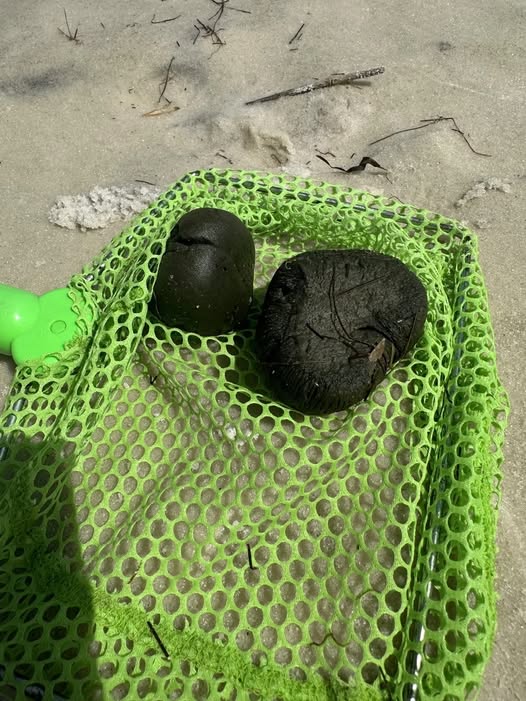
Over time, pieces of this soft sediment break away due to water movement, changing weather, or even footsteps near the shore. Once loose, the bay’s slow, steady motion rolls them back and forth, gradually shaping them into smooth, rounded forms that blend easily into the sand until someone stops to look closer.
For generations, mudballs have been part of growing up along the Gulf Coast. They may not be famous like shells, but they spark curiosity and wonder—quiet reminders that nature often hides its best lessons in the smallest surprises.
