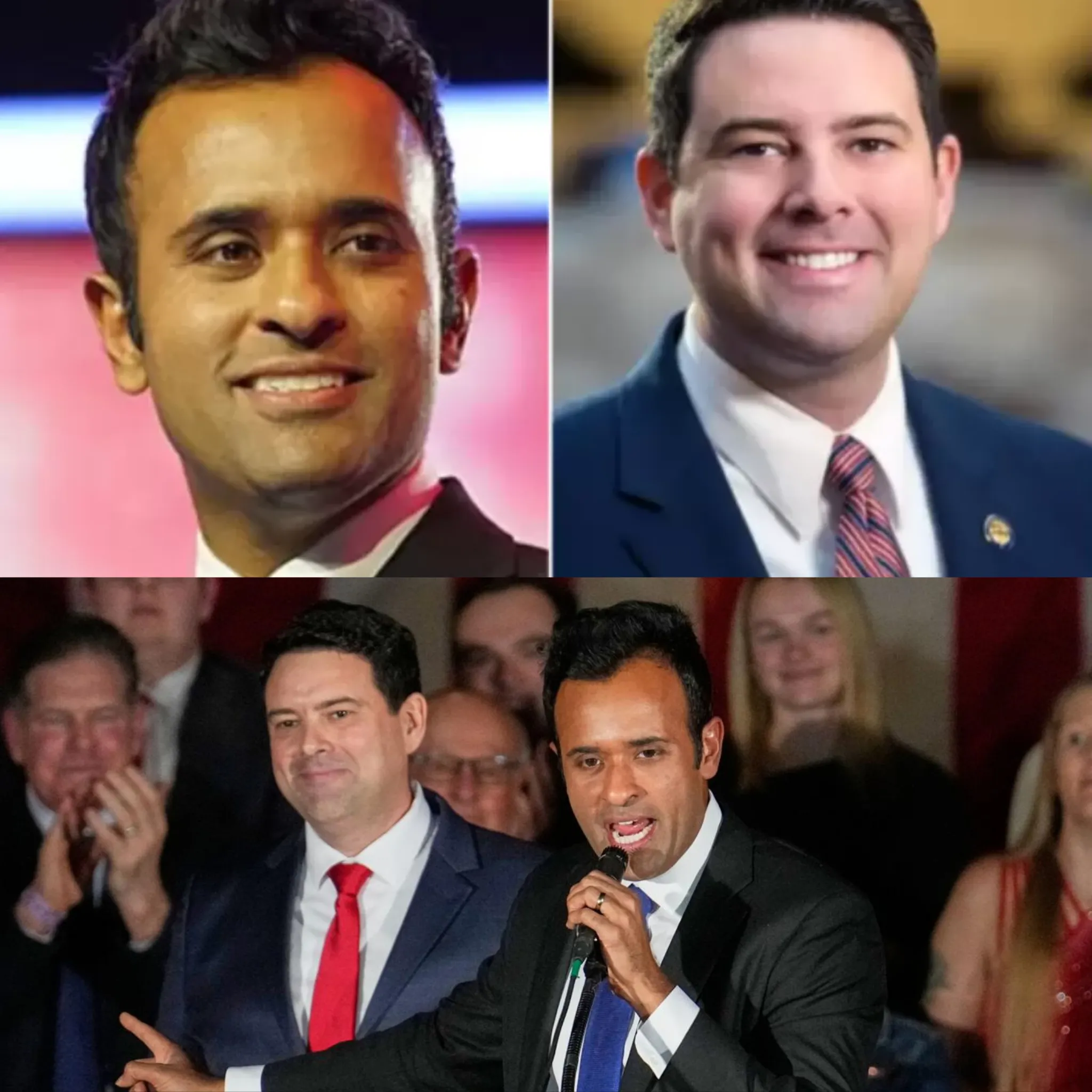
On the Democratic side, Acton’s team has seized the moment to sharpen contrasts, framing the Ramaswamy–McColley ticket as aligned with more conservative legislative priorities that they argue don’t reflect everyday Ohioans’ concerns. Democratic strategists believe this contrast could motivate their base and attract moderates skeptical of the Republican ticket’s priorities.
With both major party tickets now officially in place, Ohio’s 2026 governor’s race is entering a new and more intense phase. Observers note that selecting running mates often signals not just policy priorities, but also strategic intentions — and both sides have sent clear messages about where they plan to focus their campaigns.
The announcement of Rob McColley as Vivek Ramaswamy’s running mate marks a pivotal moment in Ohio’s 2026 political landscape. This strategic alignment blends deep political experience with outsider appeal, potentially reshaping voter perceptions and campaign dynamics. As Ohioans watch both tickets solidify and message battles sharpen, this lieutenant governor pick may prove to be a defining factor — not just in the election’s outcome, but in the future direction of Ohio’s leadership.
SHOCKING NEWS: “I won’t sell my conscience” – Jarren Duran SHOCKS by REJECTING an $80 million contract from an agricultural corporation to protect the people. y1
The Boston Red Sox were surprised that the name making waves in MLB today wasn’t due to a trade or a blockbuster contract, but rather a decision that completely defies the logic of professional sports.
Jarren Duran, the Red Sox’s star outfielder, reportedly rejected an $80 million sponsorship deal from a major agricultural corporation for one reason: to protect the interests of the local community living around the corporation’s plant.
It wasn’t because the money wasn’t enough. It wasn’t because the terms weren’t suitable. But because Duran believed that signing the contract would indirectly contribute to the negative consequences for the local population.
According to several close sources, the agricultural corporation approached Jarren Duran’s representatives late last year, offering a long-term deal that included brand promotion, global image, and large-scale media campaigns. The $80 million figure was considered one of the largest personal sponsorship deals ever offered to a Red Sox player.
For most athletes, it would be an “no-brainer” offer. But for Duran, things went a completely different way.
No further negotiation. No bargaining. No leaving the door open.
The underlying reason lay in the controversies surrounding the operations of the corporation’s agricultural plant, where local residents had repeatedly voiced concerns about environmental pollution, contaminated water sources, and deteriorating living conditions.
According to those close to him, Duran personally researched the matter, read independent reports, and spoke with community representatives before making his final decision.
He believed that associating his personal image with that corporation would contradict the values he upheld.
In a rare statement, Jarren Duran didn’t shy away from the truth – and his words sparked an MLB backlash:
“I can’t take the money if it means ignoring people living in unsafe environments. Baseball has given me so much, but it doesn’t give me the right to turn my back on the community.”
In the world of professional sports, where contracts worth tens or hundreds of millions of dollars are commonplace, Duran’s decision was seen as going against the trend. But that’s precisely what makes the story special.
A former MLB player commented:
“Many people talk about values, but very few are willing to sacrifice $80 million to defend what they believe is right.”
At Fenway Park, the Red Sox fans’ reaction was almost uniform: shock – then pride.
The Red Sox management declined to comment further on the details of the rejected contract, but a team official confirmed:
“We respect Jarren’s personal decision. He’s not only a great player, but also a socially responsible person.”
Within the team, Duran reportedly received strong support from his teammates, many of whom directly expressed their respect for his decision.
Those who have followed Jarren Duran’s career understand that he has never taken the easy path. From a player whose abilities were once questioned, through periods of heavy criticism in Boston, Duran chose to face the challenges instead of remaining silent.
This time is no different – but on a much larger scale.
He not only sacrificed money, but also accepted risks to his image, commercial relationships, and financial future.
Jarren Duran’s decision transcended the boundaries of the Red Sox or MLB. It opened up a larger debate: what is the social role of professional athletes?
Duran didn’t call for a boycott. He didn’t incite public outrage. He simply made a personal choice – but one powerful enough to force the entire sports industry to reconsider.
Jarren Duran won’t become poorer because of this decision. But he certainly lost one of the biggest financial opportunities of his life. In return, he retained something money can’t buy: consistency between action and belief.
In a world where everything has a price, Duran just reminded us that not everything should be bought with money.
And perhaps, that’s the biggest shock MLB faces today.
